Does a Suite Number Help Google Ranking

Table of Contents
How Suite Numbers Impact Local Search Ranking
Understanding Google Business Profile Address Guidelines
Suite Numbers and NAP Consistency for Local SEO
How citation matching actually works
Why the unit component is the tiebreaker
Format normalization: what actually matches
What to audit
Avoiding Duplicate Listing Suppression With Proper Suite Formatting
The shared-address problem
What suppression looks like in practice
Does adding a suite number trigger re-verification?
Formatting rules that prevent the filter from firing
If you're already suppressed
Using a Virtual Mailbox Address on Your Google Business Profile
Step-by-Step Setup: Adding Your Suite Number Correctly
Common Mistakes That Hurt Your Local Ranking
Frequently Asked Questions
Last Updated: October 16, 2026
How Suite Numbers Impact Local Search Ranking
Understanding does a suite number help google ranking is critical to local search optimization. Using a professional street address with a suite number instead of a P.O.
Google prioritizes proximity and relevance in local pack results, and a physical street address with a suite number tells Google your business operates from a real, verifiable location.
Here's what changes when you add a suite number to your local ranking strategy:
Proximity signals improve. Google can pinpoint your exact location within the service area.
NAP consistency becomes easier. A professional suite number matches across your website, citations, and Google Business Profile.
Duplicate listing suppression decreases. A unique suite number prevents Google from filtering out your listing as a duplicate.
Google treats physical street addresses as stronger ranking signals, which can improve local visibility for businesses that switch from P.O. Boxes to professional suite addresses.
Understanding Google Business Profile Address Guidelines
Google Business Profile has specific address formatting requirements. Break them and your listing may be suppressed, merged with duplicates, or ranked lower.
Google requires that your address be:
A real, physical street address (not a P.O. Box)
Formatted consistently across all platforms
Verified through postcard or phone confirmation
The suite number is part of verification: Google cross-references it against postal databases to confirm the address is real.
A common mistake is omitting the suite number from some listings while including it in others.
Format matters too: Google prefers "Suite 456" over "Ste 456" or "#456." Standardize it across your listings, website, citations, and Google Business Profile so Google recognizes them as one location.
Suite Numbers and NAP Consistency for Local SEO
NAP stands for Name, Address, Phone, one of the most important local ranking factors because Google uses it to verify your business identity across the web. Most guides stop at "be consistent" without explaining what consistency does at the data layer, which is where the suite number earns its keep.
How citation matching actually works
When Google and major aggregators (Data Axle, Localeze, Foursquare, which feed most smaller directories) ingest your business info, they don't compare addresses as a single string. They parse each into components, street number, street name, street type, directional, unit type, unit number, then normalize and score each against every record sharing your business name or phone.
That parsing step is where suite numbers matter. Consider two records:
Record A: 123 Main St
Record B: 123 Main St, Suite 456
A parser reads Record A as having no unit component and Record B as unit 456. Depending on the aggregator's matching threshold, those can score as a partial rather than exact match.
Why the unit component is the tiebreaker
In a single-tenant building, the street number alone usually disambiguates you. In a multi-tenant building, coworking space, strip mall, professional building, it doesn't. If five businesses share 500 Commerce Dr, the suite number is the only component separating them.
This explains a pattern most practitioners see: businesses in shared buildings that omit their suite number get citations merged into a neighbor's record or flagged as low-confidence and excluded from the canonical set.
Format normalization: what actually matches
Google and the major aggregators normalize common unit designators, these are treated as equivalent:
Suite 456
Ste 456
Ste. 456
What is not treated as equivalent is a missing unit versus a present unit. 123 Main St and 123 Main St, Suite 456 are different records. That's the failure mode to worry about, not whether you wrote "Suite" or "Ste."
Pro Tip Pick one format and use it everywhere, but don't lose sleep over `Suite` vs. `Ste`. The match-breaking error is omitting the unit entirely on some listings and including it on others.
What to audit
Search your business name plus street address (without the suite). Listings showing no unit are dragging your consistency score down, update them to match your Google Business Profile format.
A dedicated suite number gives you a stable unit component that never changes, so your citation records stay matched to your Google Business Profile instead of drifting apart every time you move.
Avoiding Duplicate Listing Suppression With Proper Suite Formatting
Duplicate listing suppression is a major threat to local visibility: when Google believes it has found duplicate listings for the same business, it filters out all but one, and a suppressed listing disappears from local pack results entirely.
But the scenario most business owners actually face isn't two listings for their business, it's Google confusing their business with a neighbor's. That's a different problem, and the suite number is the fix.
The shared-address problem
Google's duplicate detection looks beyond business name, it flags listings sharing a street address, phone number, or website domain. In a coworking space, executive suite building, or virtual mailbox facility, dozens of unrelated businesses can share one street address. Google must decide whether those are:
Separate businesses that happen to share a building (legitimate)
The same business listed multiple times under different names (a violation)
A lead-generation or spam cluster (a violation)
When every business at the address has a distinct suite number, the address component is unique per listing and the duplicate filter has nothing to latch onto. When several omit their suite number, they present the same address string and Google falls back on weaker signals, name similarity, category, phone, which is when legitimate businesses get caught in the net.
What suppression looks like in practice
A suppressed listing doesn't always vanish. Common patterns:
Your listing shows in Google Maps search but not in the local pack for your main keyword
Your listing appears when you search your exact business name but not for category searches
A competitor at the same address outranks you for every query, even ones you should own
If you're in a shared building and see any of these, first check whether your suite number is present and consistent across your Google Business Profile, website, and major citations.
Does adding a suite number trigger re-verification?
This is the question most guides skip. The short answer: sometimes, and it depends on what else changes.
Adding a suite number to an existing verified listing, Google may or may not require re-verification. In practice, small address refinements often go through without a new postcard, but Google reserves the right to request one. If your listing is in a shared building and has been flagged before, expect a re-verification request.
Changing your suite number (for example, moving from Suite 210 to Suite 415 in the same building), this is treated as an address change and typically triggers re-verification.
Adding a suite number to a brand-new listing, verification is required regardless.
Watch Out Don't change your suite number and your business name or phone number at the same time. Stacked changes increase the odds of a suspension review rather than a simple re-verification. Make one change, wait for it to settle, then make the next.
Formatting rules that prevent the filter from firing
Use the same unit designator everywhere (Suite is the safest default)
Include the unit on every listing, never omit it on some and include it on others
Don't add a secondary designator like Suite 456 #12, that reads as two units and confuses the parser
If you're already suppressed
Search Google Maps for your exact business name. If you find a duplicate, claim it and request a merge or removal through the Google Business Profile support flow.
A dedicated suite number gives you a unit that belongs to your business alone, so Google's duplicate filter has a clean signal to match on and no reason to fold your listing into anyone else's.
Using a Virtual Mailbox Address on Your Google Business Profile
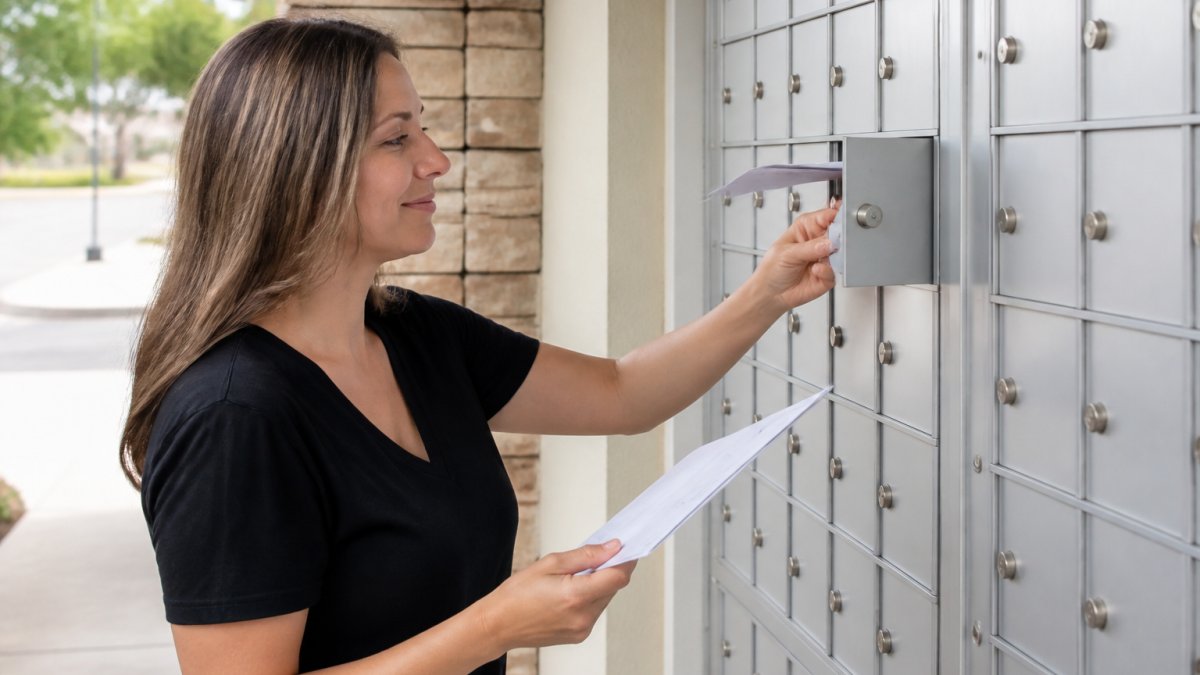
A virtual mailbox address is a physical street address from a mailbox service. Unlike a P.O. Box, it's a real street address with a suite number, which Google treats as a legitimate business location.
Many owners wonder if a virtual mailbox address hurts local ranking. No, as long as it's formatted correctly and you're transparent.
Using a virtual mailbox address offers several advantages for local SEO:
Improves professional image. Customers see a street address, not a P.O. Box.
Strengthens local ranking signals. Google recognizes it as a physical location.
Provides a consistent address. You have a permanent suite number even if you travel or work from home.
Curlew Postal Center provides virtual mailbox addresses with dedicated suite numbers, so your address appears as a legitimate business location on Google Business Profile, helping to eliminate inconsistencies and prevent duplicate suppression.
Choose a mailbox service that accepts all major carriers, USPS, FedEx, UPS, and DHL, so you can receive packages from any customer or vendor, strengthening operational credibility.
Step-by-Step Setup: Adding Your Suite Number Correctly
Adding your suite number to Google Business Profile is straightforward, but a single formatting error can reduce your local visibility.

To answer the question does a suite number help google ranking, here's how to do it correctly:
Step 1: Gather your information
Your full street address with suite number
Your phone number
Your business category
Step 2: Log into Google Business Profile
Go to Google Business Profile
Click "Manage your business"
Select your business or create a new listing
Step 3: Enter your address
In the address field, enter your street address exactly as it appears on your mailbox service documentation
Include "Suite [number]" in full, no abbreviations
Example: "123 Main Street, Suite 456"
Step 4: Verify your address
Google will send a postcard to your suite address
Wait for the postcard to arrive
Enter the verification code into your Google Business Profile
Step 5: Match your address everywhere
Copy this exact address to your website
Update all business directories and citations with the same format
Include it on business cards and marketing materials
Step 6: Monitor for duplicates
Search Google Maps for your business name
Check if multiple listings appear
If you find duplicates, request their removal through Google Business Profile
One detail many owners miss: your suite number must be formatted identically everywhere.
Common Mistakes That Hurt Your Local Ranking
Several mistakes can undermine the benefits of a suite number for local SEO.
Inconsistent formatting across platforms. The most common error: Google Business Profile shows one format, your website another, your citations a third.
Curlew Postal Center offers a verified suite number, accepts all major carriers, and provides a professional address that strengthens local SEO ranking signals.
The difference between ranking well in local search and not often comes down to address accuracy and consistency.
Frequently Asked Questions
Does adding a suite number to my Google Business Profile actually improve my local ranking?
Yes, but only if the suite number is consistent across all your business listings and citations. Google's ranking algorithm prioritizes NAP consistency (Name, Address, Phone). A suite number that matches your physical location in every citation strengthens your relevance signal. However, the suite number itself is not a ranking factor, consistency is. Inconsistent or missing suite numbers can trigger duplicate listing filters, which suppresses your visibility in local search results and the local pack.
What's the difference between using a suite number and a P.O. box for local SEO?
Google treats P.O. boxes and suite numbers very differently. A P.O. box is not a physical street address and Google's guidelines explicitly state that service area businesses should use their actual service location. A suite number is part of a real street address, which provides geo-location data that Google uses to determine local relevance and proximity. Suite numbers also accept deliveries from all major carriers (FedEx, UPS, DHL), whereas P.O. boxes do not, making them unsuitable for many business types in the eyes of customers and search algorithms.
Can I use a virtual mailbox address as my suite number on my Google Business Profile?
Yes, provided the virtual mailbox address is a legitimate physical street address with a suite number. Google's Business Profile address guidelines allow service area businesses to use a physical street address that is not their primary work location. A virtual mailbox with a suite number meets this requirement because it is a real street address with full verification capability. You must ensure the address is formatted consistently across all citations and that you can verify ownership of the location with Google.
What happens if multiple businesses use the same street address with different suite numbers?
Google's duplicate location filtering algorithm checks for NAP consistency and address accuracy to distinguish between separate businesses. Different suite numbers at the same street address are treated as distinct locations, which prevents suppression. However, if the suite numbers are inconsistent across your citations, listed as 'Suite 100' in one place and 'Unit 100' in another, Google may flag it as a duplicate or inaccurate listing. Always use the exact same suite format (Suite, Unit, #, etc.) everywhere your address appears.
Get Started Today


Comments